
State-run Indian Oil Corporation, Hindustan Petroleum and Bharat Petroleum currently sell petrol, a commodity which the government freed from its control in June last year, at a discount of about Rs 4.50 a litre to its imported cost.
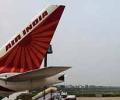
"Air India is unable to pay even after a 90-day credit period. They owe us about Rs 300 crore without interest. There is also no bank guarantee from Air India to any of the oil marketing companies. We do not know when will the company honour its dues," said a BPCL official on condition of anonymity.
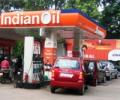
IOC and its sister PSUs, Hindustan Petroleum and Bharat Petroleum, sell diesel, domestic LPG and kerosene at rates way lower than their imported cost to help government keep general price inflation under check.

Kaushik Basu, chief economic advisor in the finance ministry, said, "All I can say is, we are very serious about fiscal consolidation, and intend holding on to our fiscal targets, even if the crude price rises on a sustained basis."
A series of rises in petrol price following its decontrol on June 25 last year has increased the state governments' earnings from value added tax on petrol by around 21 per cent.
A higher government borrowing will 'crowd-out' the private borrowing and push interest rates higher.
Despite raising petrol prices by around Rs 2.95 a litre - the second-biggest increase in this calendar year so far - public and private retailers are losing Rs 50 crore a day on selling the auto fuel.
Besides IOC, Royal Dutch Shell is believed to have evinced interest in reviving the petrol pumps, industry sources said. Reliance, as part of a two part bid process, had sought expression of interest from IOC, Shell, Bharat Petroleum and Hindustan Petroleum by Friday for a possible partnership for reopening the petrol pumps.
After a year of sluggish growth in fuel retail outlets, the three state-run oil-marketing companies--Indian Oil Corporation, Bharat Petroleum Corporation and Hindustan Petroleum Corporation--have chalked out aggressive plans for expansion in the next financial year. They will be commissioning over 2,100 outlets in 2009-10--over three times what they added in the current year--at an investment of about Rs 1,200 crore.
The three firms had planned to jointly buy or lease plantations and related units for producing ethanol, a by-product of sugarcane that is doped in petrol to reduce dependence on imported oil. The three firms have suffered a Rs 14,700-crore (Rs 147 billion) net loss in the first-half of the current fiscal and were living on borrowed money as they lost heavily on retail fuel sales domestically.
Many of the 37,000 petrol pumps across the country could go dry by Thursday if the indefinite strike by executives from public sector oil companies continues. Over 55,000 oil PSU officers from 14 oil companies -- under the umbrella of the Oil Sector Officers Association (OSOA) -- began their indefinite strike on Wednesday demanding higher wages.
Petroleum Minister Ram Naik said the terms and conditions of the strategic sale of HPCL and and public offer in BPCL would be worked out by a core group of secretaries on divestment.
A decision on sale of government equity in HPCL, BPCL could be delayed beyond the Dec 7 deadline with PetroMin Naik stating he has no idea about the next CCD meet.\n\n\n\n
OMCs losing Rs 20 crore daily on sales, 18 months after prices were deregulated.
Reliance Industries, the country's largest LPG producer, will be spared from footing the Rs 7,200 crore (Rs 72 billion) bill for the one year freeze in LPG and kerosene prices, despite rising cost.
GAIL (India) Ltd and its partners on Wednesday signed the Exploration and Production Sharing Agreement with government of Oman for Block 56 in Muscat.
Those in favour of a 15-day cycle for price adjustment argue that oil firms already have a mechanism of calculating the desired fuel prices on 1st and 16th of every month.
Supreme Court on Friday issued notices to the Union government and public sector oil majors Hindustan Petroleum Corporation and Bharat Petroleum Corporation on a public interest litigation challenging the Centre's decision to privatise.
Concerned over growing resistance from the Opposition and some of the allies of the ruling National Democratic Alliance, the divestment ministry appears to have given up hopes of any big-ticket privatisation.
Public sector oil firms plan to set up over 4600 petrol stations and 907 LPG sale agencies in the current fiscal, Petroleum Minister Mani Shankar Aiyar said on Thursday.
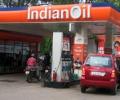
State-owned fuel retailers, which last week raised petrol price by Rs 1.80 per litre, reported a net loss of over Rs 8,000 crore (Rs 80 billion) in July-September quarter and are borrowing heavily to even buy crude oil.
The country's oil marketing companies are preparing for another round of increase in the price of aviation turbine fuel on July 1 as the average price of the fuel in international markets has shot up to around $160 per barrel in June from $150 per barrel in May.
The oil marketing companies are driving credit growth. The banking sector -- which typically sees credit contraction in the initial months -- has managed to buck the trend and has added nearly Rs 16,000 crore (Rs 160 billion) of advances in the first seven weeks of the current financial year thanks to the demand from the two sectors.
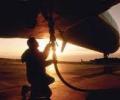
IOC and other state retailers had on September 16 raised jet fuel price by 2.5 per cent.
Oil and Natural Gas Corporation said on Thursday that it would like to acquire public sector oil companies -- Hindustan Petroleum Corporation and Bharat Petroleum Corporation.
The retail losses that the country's oil marketing companies incur on sale of petrol, diesel, cooking gas and kerosene at subsidised prices have risen by 7.3 per cent to around Rs 440 crore (Rs 4.4 billion) per day in the fortnight ended March 31.IOC lost Rs 17 for every litre of petrol it sold, up from Rs 14.65 a litre on March 15. It lost Rs 316 per 14.2-kg cylinder, compared with Rs 303.65 per cylinder in the previous fortnight.
Oil India chief reveals plans of the upcoming IPO and future investment strategies.
Bharat Petroleum Corporation Ltd and Hindustan Petroleum Corporation Ltd have restarted their Mumbai-based refineries, which were partially shut following incessant rains.
The Oil and Natural Gas Corp has asked the government to review the scheme of sharing of liquefied petroleum gas and kerosene subsidy with upstream firms and said the scheme should not be extended beyond March 2004.

Jet fuel will cost Rs 37,300 per kl in Mumbai, home to the nation's busiest airport, from Rs 38,246.60. The reduced rates will help cash-strapped airlines cut fuel cost, which constitutes roughly 40 per cent of their operational cost.
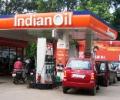
Indian Oil Corporation on Tuesday said it may lose over Rs 25,000 crore (Rs 250 billion) in revenues this fiscal on selling fuel below imported cost.
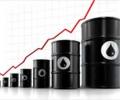
The revenue loss, termed as under-recovery by oil firms, will be the highest-ever.
